
CUHK
News Centre
CUHK partners with Ta Kwu Ling District Rural Committee to drive urban-rural integration and sustainable development in the Northern Metropolis
The Chinese University of Hong Kong’s (CUHK) Research Centre for Sustainable Placemaking and Urban-Rural Regeneration (SPUR) yesterday (21 September) established a strategic partnership with the Ta Kwu Ling District Rural Committee (TKLDRC) to advance sustainable rural revitalisation, community engagement, cultural heritage conservation, placemaking and urban-rural integration in Ta Kwu Ling and surrounding rural areas against the backdrop of the Northern Metropolis development.
A Memorandum of Understanding (MoU) was signed by Director of SPUR and Professor in the School of Architecture Professor Thomas Chung Wang-leung, and Chairperson of TKLDRC Ms Chan Yuet-ming. The signing was witnessed by Mr Zhou Yaojing, Deputy Director of the Department of Eastern New Territories Affairs of the Liaison Office of the Central People’s Government in the HKSAR; Mr Yeung Hoi, Acting Chief Planning and Development Officer (1) of the Northern Metropolis Coordination Office (NMCO); The Honourable Lam Siu-lo, Member of the Legislative Council; and Professor Anthony Fung Ying-him, Dean of Social Science and Wei Lun Professor of Journalism and Communication at CUHK.
Building a New Platform for Academic and Community Collaboration
Located in the northeast of the New Territories, adjacent to the Heung Yuen Wai and Man Kam To control points, Ta Kwu Ling is an important node in the HKSAR Government’s Northern Metropolis vision. As the Government advances key initiatives, the area around Ta Kwu Ling is transforming from a traditional rural and brownfield operations area into a diversified development space accommodating port economy, higher education, innovation industries, ecological conservation, and village culture. This strategic direction is further reinforced by the first Five-Year Plan for Economic and Social Development (2026-2030) of Hong Kong: the former New Territories North New Town is renamed as the Ta Kwu Ling New Development Area, and . These updates reflect Ta Kwu Ling’s growing potential to drive potential across industry, academia and research sectors.
Under the MoU, SPUR will provide professional expertise in academic research, planning and design methodologies, placemaking strategies, cultural heritage conservation, public education and knowledge transfer, while TKLDRC will facilitate community liaison, provision of local knowledge, coordination with village representatives and residents and the coordination of venue arrangements and liaison with district networks.
Professor Thomas Chung stated: “The key to the development of the Northern Metropolis lies not only in infrastructure and industries, but also in preserving its rural culture, community networks and local vitality. SPUR aims to serve as a vital bridge connecting the University with rural communities and as a research partner for district development, working with all parties to establish Ta Kwu Ling as a benchmark for urban-rural integration in Hong Kong and a practical model for the sustainable development of the Northern Metropolis.”
Ms Chan Yuet-ming said: “Ta Kwu Ling has its villages, history, diverse local industries and aspirations for the future. The Rural Committee looks forward to collaborating with CUHK to integrate academic research with local wisdom in shaping the future of the Northern Metropolis.”
The Honourable Lam Siu-lo said: “The cooperation between SPUR and the TKLDRC is expected to integrate ‘academic research’ and ‘community engagement’, grounding university research in real-world applications while bringing local community’s aspirations into the planning horizon and knowledge production process at an early stage.”
Pioneering demonstrations: SPUR’s research and knowledge transfer in Ta Kwu Ling and the Northern Metropolis
SPUR is dedicated to interdisciplinary action research on urban-rural symbiosis and rural conservation in Hong Kong and the Greater Bay Area. Housed under CUHK’s Institute of Environment, Energy and Sustainability (IEES) and supported by the Faculty of Social Science, the Centre’s sustainable revitalisation projects in villages such as Mui Tsz Lam, Kuk Po and Yung Shue Au earned major international honours, including the prestigious Times Higher Education (THE) Asia Awards Research Project of the Year 2025 and American Institute of Architects (AIA Hong Kong) Community Citation 2025.
Focusing on issues related to the development of the Northern Metropolis represented by Ta Kwu Ling, the Centre has laid a solid foundation for cooperation through different courses, thematic teaching and community practice, leading students in field research and design to understand the realities of conservation from multiple dimensions. In addition, the research team is continuously tracking the cultural history, settlement prototypes and available rural capital of the Northern Metropolis, accumulating rich raw data and methodological reserves for the University’s subsequent participation in Northern Metropolis research.
Future outlook: Play a pivotal “hub” role in the Northern Metropolis and “University Town” development
Professor Anthony Fung stated: “As CUHK plays an active role in the development and research related to the Northern Metropolis and the Northern Metropolis University Town, the SPUR platform will be further upgraded to become an important hub between the University and the Northern Metropolis. Looking ahead, leveraging its platform advantages, SPUR will continue to drive interdisciplinary research, nurture top talent and translate social science insights into practical models, integrating the strategy of ‘sustainable placemaking’ into regional development. In addition to serving as an engine for knowledge production, CUHK is committed to serving as an intellectual engine and think tank, providing theoretical frameworks and practical approaches for urban-rural integration, rural conservation and sustainable development in the Northern Metropolis, thereby achieving a leap from district-level cooperation to greatness in regional governance innovation.”


Professor Thomas Chung Wang-leung (first row right), Director of the Research Centre for Sustainable Placemaking and Urban-Rural Regeneration (SPUR) at CUHK, and Ms Chan Yuet-ming, Chairperson of the Ta Kwu Ling District Rural Committee (first row left), signed a Memorandum of Understanding to promote sustainable development, community placemaking and urban-rural integration in Ta Kwu Ling.
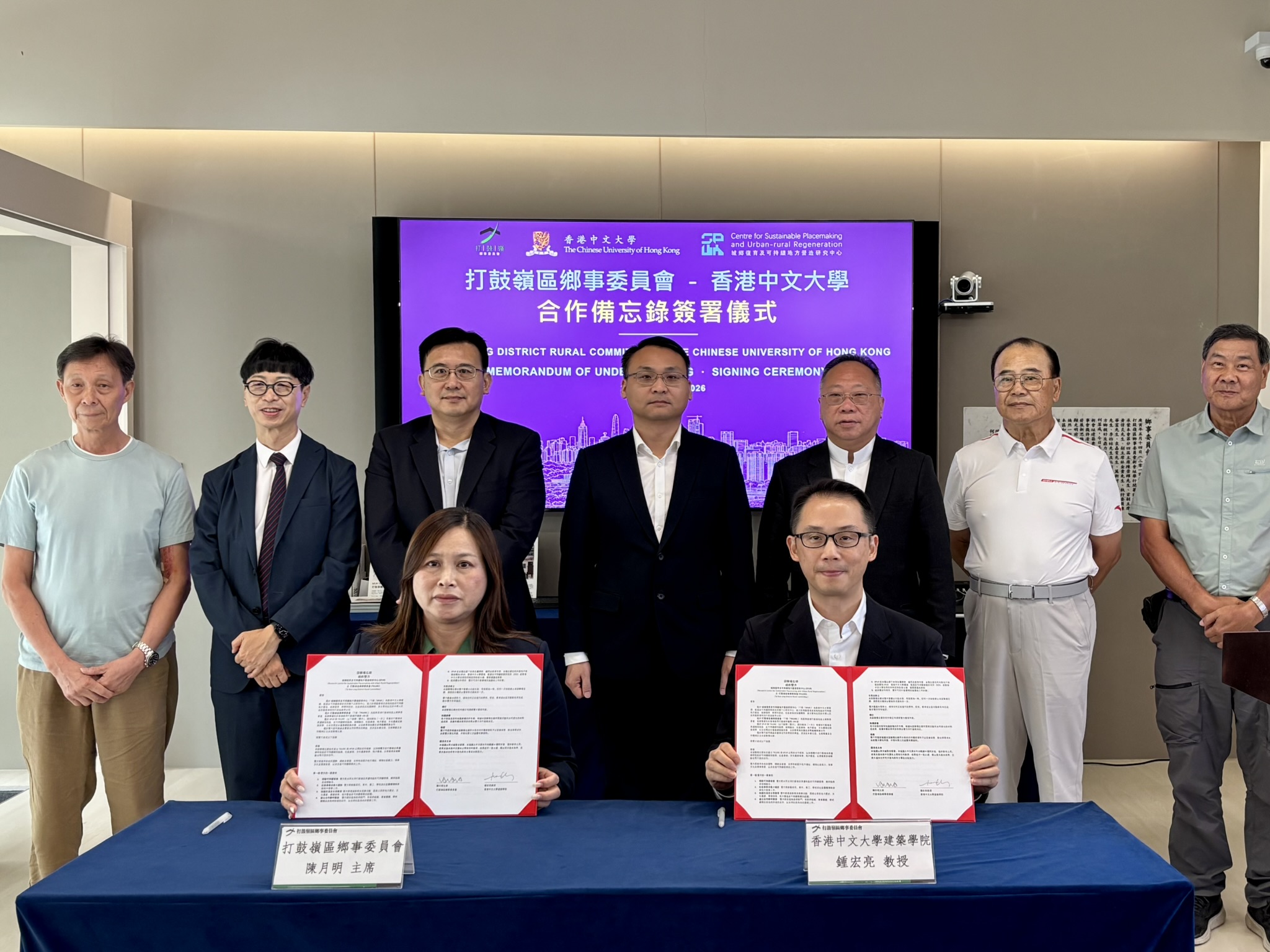
(Second row, from second left) Professor Anthony Fung Ying-him, Dean of Social Science at CUHK; Mr Yeung Hoi, Acting Head of Division (1), Planning and Development Section of the Northern Metropolis Co-ordination Office; Mr Zhou Yaojing, Deputy Director of the Department of Eastern New Territories Affairs of the Liaison Office of the Central People’s Government in the HKSAR; and Mr Lam Siu-lo, Member of the Legislative Council of Hong Kong, attended and witnessed the signing ceremony.
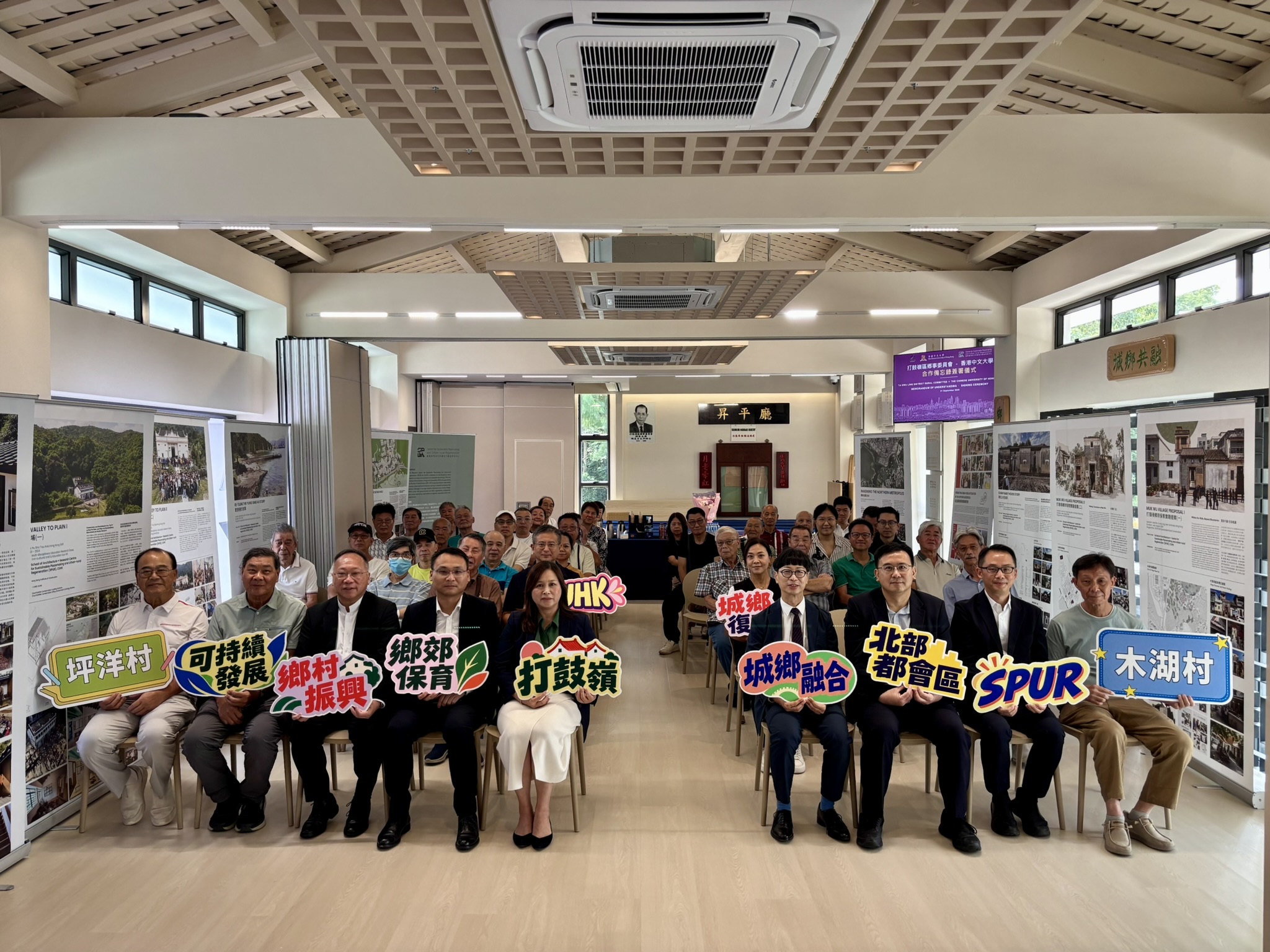
Representatives from CUHK, the Ta Kwu Ling District Rural Committee and community stakeholders attended the signing ceremony.

SPUR, in collaboration with CUHK’s Office of Academic Links (Mainland and Regional), organised the Summer School for Mainland Students (SSMS). Through a course on curation and rural conservation, students from Mainland universities visited Ta Kwu Ling to explore Hong Kong’s rural heritage, ecological conservation and sustainable placemaking practices, while gaining a deeper understanding of urban-rural development issues in the Northern Metropolis.

SPUR, in collaboration with CUHK’s Office of Academic Links (Mainland and Regional), organised the Summer School for Mainland Students (SSMS). Through a course on curation and rural conservation, students from Mainland universities visited Ta Kwu Ling to explore Hong Kong’s rural heritage, ecological conservation and sustainable placemaking practices, while gaining a deeper understanding of urban-rural development issues in the Northern Metropolis.

The SPUR team conducted field research in Ta Kwu Ling, a border area near the Heung Yuen Wai and Man Kam To Control Points, where a number of traditional village houses have been graded as Grade 3 Historic Buildings.